
How to Choose the Right Musical Instrument for Your Child
One of the first questions parents ask when considering music lessons is:
“Which instrument should my child start on?”
It’s a great question — and honestly, it can feel like a big decision. Piano, guitar, drums, violin, voice… there are so many options that families often worry about picking the wrong one.
The good news?
You’re not permanently locking your child into anything. In fact, many musicians learn more than one instrument over time. The real goal is to choose an instrument that builds confidence, creates success early, and helps your child enjoy learning music.
Here’s how to make a smart (and stress-free) choice.
1. Start with Your Child’s Personality
Your child’s personality often gives the biggest clue.
Kids who love structure and puzzles often do very well with piano
Energetic, movement-oriented kids may enjoy drums
Social and expressive kids often love voice or guitar
Detail-oriented children may thrive with violin
Try watching what they naturally gravitate toward. Do they tap rhythms on tables? Sing constantly? Pretend a ruler is a guitar? Those little habits matter more than you think.
The best instrument is the one your child feels excited to sit down and try.
2. Consider Age and Physical Readiness
Some instruments require more physical development than others.
Younger beginners (ages 5–7) typically succeed most with:
Piano
Ukulele
Violin (with a properly sized instrument)
Larger wind and brass instruments, as well as full-size guitars, can be frustrating for smaller hands or developing lung capacity. When an instrument is physically difficult, kids often assume they’re “bad at music,” when really they just started on something not developmentally friendly yet.
Choosing an age-appropriate instrument helps prevent unnecessary discouragement.
3. Think About Your Home Environment
This is the practical part parents appreciate later.
Before choosing an instrument, ask:
Where will practice happen?
How much noise can the household tolerate?
What time of day will they practice?
Drums are fun… but not always at 9:00pm. Keyboards with headphones, on the other hand, make practice possible at any hour.
The easier practice fits into daily life, the more consistent your child will be — and consistency is what actually produces progress.
4. Understand the Learning Curve
Some instruments make sound immediately. Others take patience.
For example:
A piano produces a pleasant sound the first day
A violin or trumpet may take a few weeks before it sounds smooth
Guitar can be uncomfortable on fingers at first
None of these are bad choices — but a child who becomes discouraged easily may benefit from an instrument that provides early success.
Early wins build motivation.
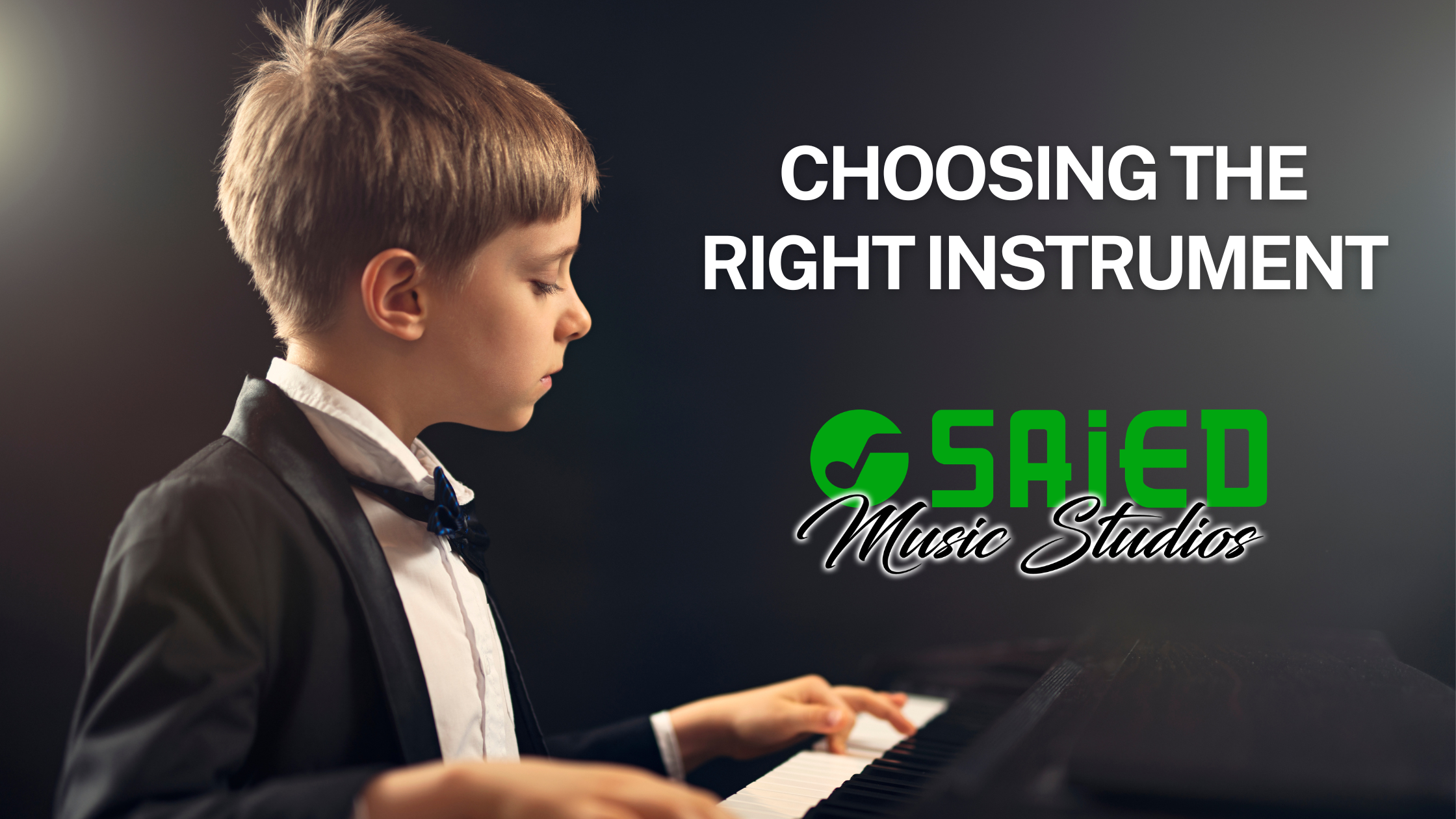
5. Why Piano Is Often the Best Place to Start
Here’s something many families don’t realize:
Piano lessons are almost always the strongest starting point — for kids and even adults.
The reason is simple: the piano visually shows how music works.
On the keyboard, students can literally see high notes, low notes, patterns, chords, and rhythm. Because of this, piano students learn:
note reading
rhythm
coordination
musical understanding
theory fundamentals
All at the same time.
Those skills transfer directly to nearly every other instrument. A child who starts on piano can later move to guitar, voice, band, or orchestra instruments much more easily and confidently.
That’s why many professional musicians — even singers and guitarists — actually began with piano training first. It builds a musical foundation instead of just teaching one instrument.
Starting with piano doesn’t mean your child has to stay with piano forever.
It simply gives them the strongest possible beginning.
6. Try a Lesson Before Buying an Instrument
A common mistake families make is purchasing an instrument first and discovering later their child doesn’t connect with it.
Instead, start with a trial lesson.
This allows your child to:
meet a teacher
experience a real lesson
test interest level
build excitement
Many students know within the first lesson whether they feel comfortable and curious. That’s a much better indicator than guessing at home.
7. Talk to a Teacher (It Helps More Than You Think)
Teachers are actually very good at helping families decide.
An experienced instructor can quickly notice:
attention span
coordination
confidence level
learning style
motivation
Sometimes a child who says they want drums will actually succeed much faster on piano first — and then transition later once they’ve built musical skills.
Guidance at the beginning often prevents frustration later.
Remember — The Goal Isn’t the Instrument
The goal isn’t picking the “perfect instrument.”
The goal is helping your child:
build confidence
experience success
enjoy learning
develop discipline
discover creativity
The right starting point simply makes that journey smoother.
At Saied Music Studios, we help families walk through this decision every day. We’re always happy to talk through options, recommend a starting instrument, and help your child feel comfortable from the very first lesson.
Music should feel exciting, not intimidating — and we’d love to help your family get started. 🎵